
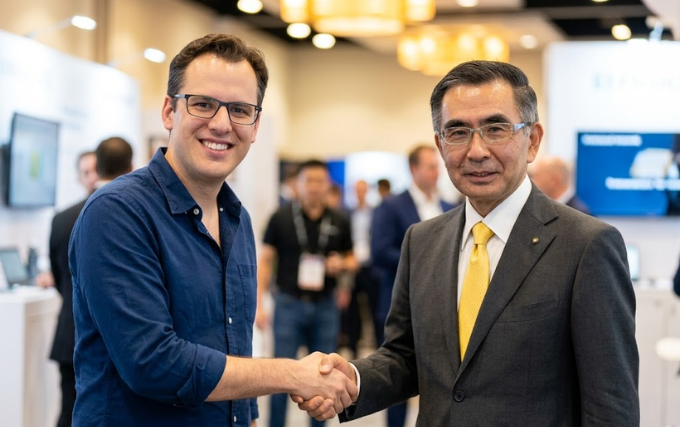
Innovation can take many forms. Some leaders transform how people communicate, while others reshape how people move around the world. Mike Krieger and Toshihiro Suzuki represent two different approaches to that process.
Krieger helped create Instagram and later moved into artificial intelligence product development. Suzuki leads Suzuki Motor Corporation, a global mobility company with deep roots in Japan. Their industries differ greatly, yet both leaders focus on useful products, practical innovation, and changing customer needs.
Their careers also show how technology, design, leadership, and global thinking can influence modern business. Understanding their journeys provides useful lessons for entrepreneurs, executives, engineers, and anyone interested in innovation.
Who Is Mike Krieger?
Mike Krieger is a Brazilian-born software engineer, entrepreneur, and product leader. He became widely known as the co-founder and chief technology officer of Instagram.
Krieger studied Symbolic Systems at Stanford University. That field combined areas such as computer science, psychology, cognition, and human-computer interaction. His education helped shape his interest in technology that feels natural and accessible to everyday users.
Before Instagram, Krieger worked at Meebo as a user experience designer and engineer. That experience gave him valuable exposure to product development and user-focused technology.
At Stanford, Krieger met Kevin Systrom through the university’s entrepreneurial community. Their partnership eventually produced Instagram.
The Creation of Instagram
Instagram began with a broader idea. Systrom had developed Burbn, a location-based mobile application that included several features. Krieger and Systrom eventually recognized that photo sharing offered a stronger and clearer user experience.
They simplified the concept and focused heavily on mobile photography. Instagram launched in October 2010 and quickly attracted users because of its simple interface, filters, and easy sharing experience.
Krieger played a major technical role during Instagram’s early growth. He helped build the infrastructure that supported rapid expansion while maintaining a smooth experience for users.
The company grew remarkably quickly. Facebook announced its agreement to acquire Instagram for approximately $1 billion in 2012.
However, the acquisition did not end Krieger’s technology journey. He continued helping Instagram develop as a major global platform. Anthropic later noted that he helped grow Instagram’s engineering organization to more than 450 people while the platform expanded beyond one billion users.
Mike Krieger’s Approach to Innovation
Krieger’s career demonstrates the value of combining engineering with human-centered design.
Instead of starting with technology alone, he has emphasized understanding what people actually need. His background in Symbolic Systems helped him examine the relationship between technology and human behavior.
That approach mattered greatly at Instagram. Mobile photography already existed, but the team identified problems around photo quality, uploading speed, and sharing. Instagram addressed those frustrations through a focused product experience.
Furthermore, Krieger understood that successful products require continuous improvement. Teams must listen to users, study behavior, solve technical challenges, and make thoughtful decisions as products grow.
After Instagram, Krieger and Systrom created Artifact, a personalized news application. Yahoo later acquired the company.
In 2024, Krieger joined Anthropic as Chief Product Officer. He took responsibility for product engineering, product management, and product design. Anthropic highlighted his experience building intuitive products and scaling large technology teams.
Anthropic later announced that Krieger would join its Labs initiative in 2026 after spending two years as Chief Product Officer.
Who Is Toshihiro Suzuki?
Toshihiro Suzuki leads Suzuki Motor Corporation, one of Japan’s best-known mobility companies.
Suzuki’s history reaches back to 1920, when the company began as Suzuki Loom Manufacturing. Over time, the business expanded into motorcycles, automobiles, marine products, and other mobility solutions.
Toshihiro Suzuki joined the company in 1994. His career included manufacturing, product planning, corporate planning, international business, and senior executive responsibilities.
He worked as plant manager at Suzuki’s Iwata Plant and later served in the United States at General Motors. He also held important product planning and corporate planning positions before becoming president.
Suzuki appointed him Representative Director and President in 2015. Since 2021, he has also served as Chairman of the Board of Directors. Suzuki’s latest corporate information, updated in June 2026, continues to list him as Representative Director and President.
Toshihiro Suzuki’s Leadership Philosophy
Suzuki’s leadership style centers on practical mobility and customer needs.
The company emphasizes the philosophy of “Sho-Sho-Kei-Tan-Bi,” which focuses on smaller, fewer, lighter, shorter, and beautiful solutions. This philosophy encourages Suzuki to develop vehicles that use resources efficiently while providing the features customers genuinely need.
That principle reflects a broader idea: innovation does not always require making products larger or more complicated.
Instead, companies can create value by removing unnecessary complexity. Compact vehicles can reduce energy consumption, occupy less space, and provide practical transportation for millions of people.
Toshihiro Suzuki has also described Suzuki’s ambition to become closely connected with people’s daily lives. The company aims to address mobility challenges while supporting communities and economic development.
Suzuki’s Global Influence
Suzuki operates across major international markets and serves customers through automobiles, motorcycles, marine products, and other mobility solutions.
The company’s international development reflects a long-term focus on affordable and practical transportation. Suzuki has particularly strong connections with markets where compact and efficient vehicles provide significant value.
India represents one important example. Suzuki has developed a substantial presence there, making the country an important part of its international business strategy.
This global approach requires more than exporting products. Companies must understand local transportation habits, economic conditions, customer expectations, regulations, and infrastructure.
Toshihiro Suzuki’s international experience helped prepare him for that challenge. His assignment at General Motors and later responsibility for global marketing gave him exposure to international business before he became president.
Mike Krieger and Toshihiro Suzuki: Two Different Innovation Models
Although Mike Krieger and Toshihiro Suzuki work in different industries, their careers share several important themes.
Krieger operates primarily within software, social media, and artificial intelligence. His products can reach millions of users through smartphones and digital platforms.
Suzuki operates within physical mobility. His company’s products require manufacturing facilities, supply chains, engineering systems, dealerships, regulatory compliance, and long-term maintenance.
Despite those differences, both leaders understand the importance of solving real problems.
Krieger focused on making mobile photo sharing easier. Later, he moved toward building useful AI products and experiences.
Suzuki focuses on making mobility practical, efficient, and accessible for people across different markets.
Therefore, both approaches begin with the customer rather than technology alone.
The Importance of User-Centered Innovation
One of the strongest connections between these two careers involves customer-focused thinking.
Instagram succeeded partly because its founders removed unnecessary complexity from mobile photo sharing. Users could take a picture, improve its appearance, and share it quickly.
Suzuki follows a similar principle in physical products. The company aims to create vehicles that provide the features people need without unnecessary size, weight, or energy consumption.
These approaches reveal an important lesson. Innovation does not always mean adding more features.
Sometimes innovation means identifying what people truly need and removing everything that creates friction.
That principle works across industries. A software company can simplify an interface, while an automobile manufacturer can reduce vehicle weight. Both decisions can improve the customer experience.
Leadership Lessons From Their Careers
The careers of Mike Krieger and Toshihiro Suzuki offer several valuable leadership lessons.
1. Start With a Real Problem
Successful innovation usually begins with a genuine customer problem.
Instagram addressed difficulties around mobile photography and sharing. Suzuki develops mobility products around everyday transportation needs.
2. Keep Products Practical
Complexity can reduce usefulness. Both leaders demonstrate the value of simplicity and practicality.
3. Build Strong Teams
Krieger helped scale Instagram’s engineering organization dramatically. His career shows that leaders must develop teams as products grow.
Suzuki likewise leads a large multinational organization that depends on engineering, manufacturing, sales, technology, and international operations.
4. Adapt to Change
Krieger moved from social media to personalized news and then artificial intelligence. His career shows how technology leaders can reinvent themselves.
Suzuki has guided a traditional mobility company through major changes involving electrification, new mobility concepts, efficiency, and changing customer expectations.
5. Think Globally
Digital products can cross borders almost instantly. Physical products require deeper localization.
Both leaders demonstrate the importance of understanding international audiences and markets.
Their Broader Global Impact
Mike Krieger’s impact reaches beyond Instagram’s original photo-sharing concept. His work contributed to the development of large-scale social technology and helped demonstrate how simple mobile products could become global platforms.
His move into artificial intelligence adds another chapter to that story. Anthropic’s focus on Claude and responsible AI places Krieger in another rapidly developing technology sector.
Toshihiro Suzuki’s influence comes through a different path. His leadership connects directly with transportation, manufacturing, employment, international trade, and mobility.
Suzuki’s products serve people who need dependable transportation for work, family, business, and everyday life. The company’s philosophy also emphasizes efficient resource use and practical design.
Consequently, their impact extends far beyond their individual job titles.
What Their Stories Teach Future Entrepreneurs
Future entrepreneurs can learn a great deal from both careers.
First, a successful product does not need to solve every problem at once. Instagram gained traction by focusing strongly on mobile photography.
Second, technical knowledge matters, but understanding people matters just as much. Krieger’s education and career show the value of combining engineering with design and human behavior.
Third, long-term leadership requires adaptation. Suzuki has led a historic mobility company through an evolving transportation landscape.
Finally, global success requires consistency without ignoring local needs. Companies must maintain their core values while adapting products and strategies to different markets.
Conclusion
Mike Krieger and Toshihiro Suzuki represent two distinct but highly valuable models of modern leadership.
Krieger helped transform mobile photography through Instagram and later expanded his career into news technology and artificial intelligence. His journey highlights product design, engineering, simplicity, and user experience.
Suzuki has led a historic Japanese mobility company through an increasingly global and technology-driven industry. His approach emphasizes practical transportation, efficiency, customer needs, and long-term social value.
Their industries may look completely different, yet their leadership principles share a common foundation. Both recognize that meaningful innovation starts with people.
Ultimately, their stories show that successful leaders do more than create products. They identify changing needs, build capable teams, embrace new challenges, and develop solutions that can improve everyday life.
That combination of innovation, practical thinking, and global perspective explains why the careers of Mike Krieger and Toshihiro Suzuki remain valuable examples for the next generation of business and technology leaders.
