
Your tooth hurts sharply and pulses. You want it to end immediately. You may have come across a claim on the internet regarding a three-second method for killing that nerve. It sounds like a dream come true. It offers a long-term solution to a horrible issue. The actual situation is somewhat different. A dental nerve cannot be permanently destroyed in three seconds at home. Let’s see what you can really accomplish.
The Truth Behind the Claim
The assertion is just untrue. It’s a myth. Deep within your teeth are tooth nerves. Hard layers protect them. They cannot be promptly reached by any home cure. A fast trick cannot permanently kill a nerve.
There are a lot of risky do-it-yourself techniques available online. Some advise using sharp items, alcohol, or bleach. Never use these techniques to try to “kill” your own nerves. The issue won’t be resolved by them. They will seriously harm tissue. You run the danger of getting a major infection. These measures have the potential to significantly worsen the situation.
Why Does Your Tooth Hurt So Much?
Examine the inside of a tooth to comprehend the discomfort. Pulp is a mushy substance found in the core. This pulp contains tissue, blood vessels, and nerves. The nerve becomes visible when your tooth’s outer layers are compromised. It gets agitated.
Usually, tooth decay is the primary cause. A cavity is made by bacteria. Bacteria can reach the pulp if the cavity is deep. An inflammation develops in the nerve. It’s called pulpitis. The hard tooth becomes compressed. The severe discomfort is brought on by this pressure.
An injury, gum disease, or a fractured tooth are additional causes of nerve discomfort. Enamel can also be worn down by grinding your teeth. A sinus infection may occasionally even resemble a toothache. The pain indicates an issue that requires a medical diagnosis.
Smart Ways to Manage Pain at Home
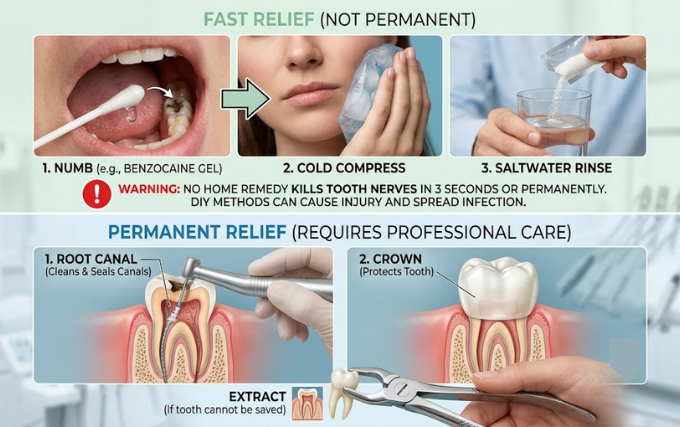
Although the nerve cannot be killed, the discomfort can be lessened. While you wait for a dentist, you can experiment with a number of safe techniques. These are simply temporary fixes. They don’t address the underlying issue.
Over-the-Counter Pain Relievers
Take a painkiller such as acetaminophen or ibuprofen. Inflammation is decreased with ibuprofen. For dental discomfort, this can be quite beneficial. Always adhere to the package’s dosing recommendations. Aspirin should never be applied directly to your gums. The tissue may be burned by this.
Cold Compress
Put a cold pack on your cheek’s outside. Spend 15 to 20 minutes doing this. Repeat after taking a break. The area is made numb by the cold. Additionally, it lessens edema. This approach works wonders for trauma-related discomfort.
Salt Water Rinse
In a glass of warm water, add half a teaspoon of salt. For around thirty seconds, gently swish it around in your mouth. Next, spit it out. This aids in keeping the place tidy. It can calm sore gums and lessen bacteria. It’s an easy and secure home treatment.
Clove Oil
One common natural treatment is clove oil. It contains a material known as eugenol. Eugenol has a numbing effect by nature. Using a cotton swab, apply a small amount to the tooth that is hurting. This may provide short-term respite. It won’t address the fundamental problem, though.
The Only Permanent Solutions
Professional dental treatment is necessary for long-term relief. For immediate treatment of the issue, you require a dentist. There are two primary ways to end the nerve pain permanently.
Root Canal Treatment
This is the most typical process. It eliminates the contaminated or damaged pulp. The inside of the tooth is cleaned and sanitized by the dentist. After that, they seal the area. Lastly, a crown is frequently placed on top.
Your natural tooth can be saved with a root canal. It permanently gets rid of the nerve pain. A lot of folks are afraid of this procedure. Actually, it doesn’t cause pain; rather, it cures it. Nowadays, receiving a root canal is frequently no more unpleasant than receiving a filling.
Tooth Extraction
A tooth may occasionally be too damaged to be saved. The dentist has to pull it in these extreme situations. This relieves pain right away. The entire tooth, including the root, is extracted by the dentist. It’s a long-term fix. You can then talk about choices for replacements. These could be a bridge or an implant.
When to See a Dentist Immediately
Severe dental discomfort should not be disregarded. A dental emergency may be indicated by certain symptoms. These need expert assistance right away. It’s urgent.
If you see any of these symptoms, give your dentist a call immediately:
- Pain that last for longer than a day or two
- A fever
- Swelling in your jaw or face
- When you bite down, pain
- Red gums or a bad-tasting discharge
Visit an emergency facility right away if you are having difficulty breathing or swallowing. These indicate the spread of a dangerous infection.
Understanding Advanced Dental Treatments
Dentists are constantly refining their techniques. More teeth are saved thanks to new methods. For example, a pulpotomy just removes the pulp that is diseased. It keeps the nutritious portion intact. It can cure a condition that was previously believed to require a root canal. This method aids in the healing of the tooth by using unique materials.
After two years, one study on this treatment revealed a 90.7% success rate. This indicates that a complete root canal was avoided by the majority of persons. This field of dentistry is constantly developing. It demonstrates the necessity of consulting a specialist. They are aware of the most recent and effective therapies.
Debunking the Three-Second Myth for Good
It seems sense to look for a three-second remedy. You want the agony to go away right away. You may become desperate due to the agony. But the promise is untrue. It’s a perilous myth.
Home cures provide momentary solace. They are unable to permanently destroy the nerve. Don’t use unproven methods to endanger your health. They may result in further suffering and costs.
Removing a dental nerve is the only method to “kill” it. This is accomplished by a dentist using an extraction or root canal. The procedure takes more than three seconds. It is a confirmed medical practice that is safe and long-lasting.
Your Path to Lasting Relief
You don’t have to put up with excruciating dental discomfort. You have options that are both safe and efficient. All you have to do is follow the correct procedures.
For short-term relief, start with the safe home cures. Apply a cold compress or rinse with seawater. Take a painkiller that is available over-the-counter. As you consider your next course of action, this will make you feel better.
Second, give your dentist a call. Make an appointment. They will identify the precise source of your discomfort. The best long-term care for you will be discussed. Real, long-lasting relief may only be obtained in this way. There is no such thing as a three-second cure. The reality is a professional dental solution.
Conclusion
Severe dental pain needs to be treated right away. A dental nerve cannot be permanently destroyed at home in three seconds. This assertion is hazardous and untrue. Only short-term relief is provided by home treatments. They don’t address the root of the issue. A dentist is needed for permanent remedies. The injured nerve is removed via a root canal. The entire tooth is removed during an extraction. You can safely and permanently end your pain with both procedures. Don’t use unproven internet tactics to jeopardize your health. For an accurate diagnosis and course of therapy, consult a specialist. The long-lasting relief you genuinely require is provided by this activity. For your dental health, it is the only sensible and practical option.
