
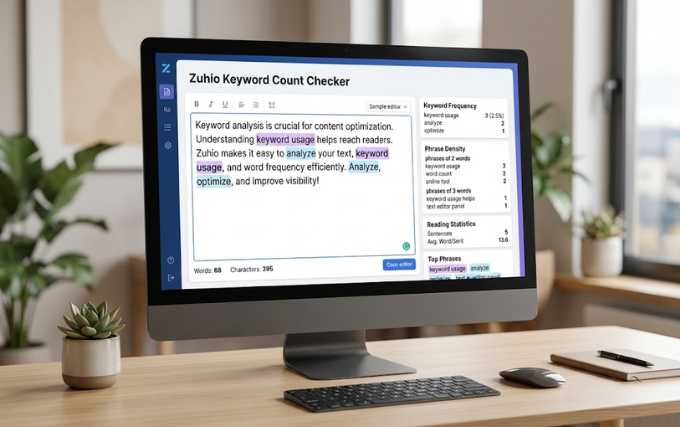
Creating useful online content requires more than simply writing a large number of words. Writers also need to understand how often important terms appear throughout an article. A word count checker can help with that process by showing how frequently a specific term appears.
The Zuhio Keyword Count Checker aims to make this task easier for beginners. It provides a simple way to check the number of times a particular word or phrase appears in written content. Therefore, writers can review their text without manually counting every occurrence.
This guide explains what the Zuhio tool does, how people can use it, and why word frequency matters. It also covers practical tips that can help beginners create natural and readable content.
What Is the Zuhio Keyword Count Checker?
The Zuhio Keyword Count Checker refers to a tool designed to count specific words or phrases inside written content. Users can enter their text and check how frequently a selected term appears.
For example, imagine that someone writes an article about home gardening. They may want to check how many times the phrase “home gardening” appears. Instead of searching through every paragraph manually, they can use a counting tool.
The process can save time, especially when an article contains thousands of words.
Moreover, beginners can use this type of tool to understand their writing more clearly. They can quickly identify repeated terms and decide whether their content needs adjustments.
Why Does Word Frequency Matter?
Word frequency can affect the overall quality of an article. A writer who repeats one phrase too often may create an uncomfortable reading experience.
On the other hand, a writer who rarely mentions the main topic may produce unclear content. Readers need enough context to understand what an article discusses.
A counting tool helps writers find a reasonable balance.
For instance, consider a 1,500-word article about fitness routines. If one phrase appears dozens of times in almost every paragraph, the article may feel repetitive. However, if the phrase appears only once, readers may struggle to understand the central subject.
Therefore, frequency checking works as a useful editing step.
How Does the Tool Help Beginners?
Beginners often struggle with content organization because they cannot easily spot repetition. A counting tool gives them a quick way to review their work.
First, users prepare their article or other written content. Next, they place the text into the tool. After that, they enter the word or phrase they want to check.
The tool can then show the number of occurrences.
This simple process helps users understand their content without learning complicated software.
Additionally, beginners can compare different sections of an article. They may discover that one section contains too many repeated terms while another section needs more topic-related wording.
How to Use the Zuhio Count Checker
Using a word counting tool usually requires only a few steps. The exact interface may vary depending on the current Zuhio website, but the general process remains simple.
Step 1: Prepare Your Text
Start with the article, paragraph, product description, or other content you want to examine.
You can write the content in a document first. Then, copy the text when you finish the first draft.
Step 2: Open the Checker
Visit the relevant Zuhio checker page and locate the text input area.
A clean interface should make the main function easy to find. Beginners should look for an area where they can paste or enter their content.
Step 3: Add Your Text
Paste the complete text into the provided field.
Try to include the entire article when you want an overall count. However, you can also examine individual sections when you want more detailed information.
Step 4: Enter the Term
Enter the word or phrase that you want to count.
For example, you might check terms such as “running shoes,” “digital marketing,” or “healthy recipes.”
Step 5: Review the Result
The checker should provide a count showing how many times the selected term appears.
Use this result as an editing reference rather than a strict writing target.
What Types of Content Can You Check?
A word frequency checker can support many types of written material.
Blog writers can use it to review articles before publication. Students can check essays and assignments for repeated wording. Businesses can examine product descriptions and landing pages.
Similarly, copywriters can review advertisements, newsletters, and promotional material.
You can also use such a tool for:
- Blog articles
- Product descriptions
- Website pages
- Essays
- Reports
- News content
- Social media drafts
- Marketing copy
- Educational material
- Long-form guides
Because the basic process involves text analysis, users can apply the tool to many writing projects.
Counting a Phrase Instead of a Single Word
Some writers need to count a complete phrase rather than one individual word.
Suppose an article focuses on “online language courses.” Counting only “online” would provide limited information because that word could appear in unrelated sentences.
Instead, checking the complete phrase gives a more useful result.
Phrase counting can also help writers identify repeated expressions. When one phrase appears throughout every section, the writer can replace some instances with natural alternatives.
As a result, the article can feel smoother and more varied.
Avoid Unnatural Repetition
A major benefit of frequency checking involves identifying excessive repetition.
Writers sometimes repeat a phrase because they want readers to understand the subject. However, too much repetition can make an article sound mechanical.
For example, consider these sentences:
“Online courses offer flexible learning. Online courses also provide convenient schedules. Online courses can help busy students.”
The repeated phrase makes the paragraph sound unnatural.
A writer could improve it like this:
“Online courses offer flexible learning. They also provide convenient schedules for busy students. These programs can make education easier to access.”
The meaning remains clear, but the writing feels more natural.
A counting tool can help you notice this type of repetition.
Use the Tool During Editing
The best time to use a word frequency checker often comes after you finish the first draft.
During the first draft, focus on expressing your ideas clearly. Do not stop after every sentence to check word frequency.
Once you finish writing, review the article with fresh attention.
Check the main terms first. Then examine phrases that appear repeatedly. Finally, read the article again and decide whether each repetition feels natural.
This approach keeps the writing process efficient.
Benefits for Content Writers
Content writers can gain several practical benefits from a frequency checker.
Saves Time
Manual counting can take considerable effort. A digital tool can complete the task much faster.
Improves Editing
The results can reveal repeated wording that writers may overlook during normal proofreading.
Supports Better Organization
Writers can compare different sections and identify areas that need stronger topic coverage.
Helps Beginners Learn
New writers can use frequency information to understand how word repetition affects readability.
Makes Reviews Easier
Editors can quickly check specific terms without reading every sentence repeatedly.
Does a Higher Count Always Mean Better Content?
No. A higher count does not automatically create better content.
Writers should focus on usefulness, clarity, accuracy, and natural language. Readers want information that answers their questions without unnecessary repetition.
For example, repeating the same phrase 50 times inside a short article may make the content frustrating to read.
Instead, mention important terms where they naturally fit. Use related expressions when appropriate, and maintain a conversational writing style.
The counting tool should support your judgment rather than replace it.
Common Mistakes Beginners Should Avoid
Beginners often make several mistakes when checking word frequency.
One common mistake involves chasing a specific number. Writers may try to reach an arbitrary count even when the text already reads naturally.
Another mistake involves repeating the same phrase in every paragraph. This approach can reduce readability.
Some writers also forget to check variations of a phrase. A singular word, plural form, or longer expression may produce different results.
Furthermore, writers sometimes edit sentences only to reduce a number. That approach can damage the natural flow of an article.
Instead, make changes only when they improve the writing.
Zuhio Count Checker for Different Writing Projects
Different projects require different approaches.
A blog article may need balanced terminology throughout several sections. A product description may require only a few important terms.
Meanwhile, an academic paper may contain specialized terminology that naturally appears many times.
News articles can also contain repeated names, places, and subjects. In such cases, repetition may make sense because readers need clear references.
Therefore, do not judge repetition by numbers alone. Always consider the purpose and context of the content.
Tips for Better Results
You can get more value from a counting tool by following a few simple practices.
Check important phrases separately.
Do not rely on one general count when your article covers several subjects.
Review the surrounding sentences.
A number alone cannot tell you whether repetition sounds natural.
Edit for readers first.
Prioritize clarity and usefulness over numerical targets.
Check the complete article.
A section may look balanced while the full article contains excessive repetition.
Read the final version aloud.
Hearing the text can reveal repeated wording that visual reading sometimes misses.
Keep your language natural.
Use different expressions when they fit the context.
Is the Zuhio Tool Useful for Beginners?
A simple counting tool can prove useful for beginners because it removes unnecessary manual work.
New writers often spend too much time worrying about repetition. A straightforward checker gives them quick information and lets them focus on improving the actual content.
However, users should understand the tool’s limits. A frequency number cannot measure writing quality, factual accuracy, originality, or reader satisfaction.
Human judgment still matters.
Therefore, treat the Zuhio Count Checker as an editing assistant rather than a complete writing solution.
FAQs
Q: What does the Zuhio Count Checker do?
A: It helps users count how often a selected word or phrase appears within their written content.
Q: Can beginners use the tool?
A: Yes. The basic process involves entering text, selecting a term, and reviewing the resulting count.
Q: Can I check a complete phrase?
A: Yes, if the tool supports phrase counting. This option can provide more useful results than checking individual words.
Q: Should I aim for a specific number?
A: No. Natural writing matters more than reaching an arbitrary number. Use the count as an editing reference.
Q: Can the tool improve my writing automatically?
A: A counting tool mainly provides frequency information. You still need to review sentences and make appropriate edits yourself.
Q: What should I do if a phrase appears too often?
A: Read the surrounding sentences and remove unnecessary repetition. You can also replace some repeated expressions with suitable alternatives.
Q: Is word frequency the only thing I should check?
A: No. Also review grammar, clarity, structure, accuracy, readability, and the overall usefulness of your content.
Conclusion
The Zuhio Keyword Count Checker can help writers understand how often specific words and phrases appear in their content. Its simple purpose makes this type of tool especially useful for beginners.
Writers can use it to identify excessive repetition, review important terms, and improve overall readability. Furthermore, it can save time compared with manual counting.
Still, numbers should never control the entire writing process. Good content should sound natural, provide useful information, and serve its readers.
Use the checker as part of your editing routine. First, write naturally. Next, review your content. Then, check important terms and make thoughtful improvements.
With this balanced approach, beginners can create cleaner, clearer, and more reader-friendly content.
